The Fool's Journey: A Complete Guide to All 22 Major Arcana Cards
For education and self-reflection only — not medical, psychological, or psychiatric advice. If you're in distress, please talk to a licensed professional. Full disclaimer.
You’re not stuck. You’re just in a chapter of the journey you haven’t named yet.
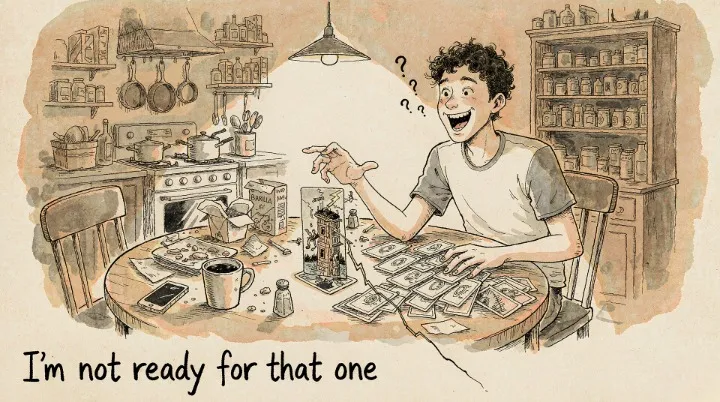
The first time Marcus ever read tarot, he pulled The Tower — the card of sudden collapse, the burning building, the crown blown off the mountain. He laughed nervously and put the deck down. “I’m not ready for that one,” he said.
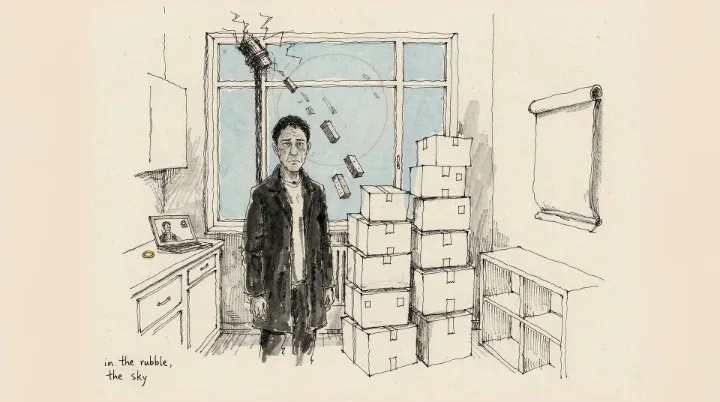
Three years later, he looked back at that reading differently. The Tower was the card he needed — it appeared the month his marriage ended, his startup failed, and his father died, all within six weeks. Everything he’d built his identity on came down. And in the rubble, for the first time in his adult life, he could see the sky.
“That’s the thing nobody tells you about the Major Arcana,” he said. “The scary cards are the ones that set you free. You just have to survive them first.”
The Fool’s Journey is the story of what Marcus went through — told as twenty-two cards, each one a stage of becoming fully human. Jung called the same process individuation. The mystics called it the Great Work. The cards just gave it pictures.
This guide walks the whole road, card by card. Not as a dictionary — as a map. So you can see where you’ve been, where you are, and which lesson is waiting next.
🗺️ The Three Acts of the Journey
The 22 Major Arcana are numbered 0–21, and they’re not random. They tell a story in three acts — the same three-act structure you’ll find in every myth, every hero’s journey, every meaningful life.
Act One — Innocence (Cards 0–7): The Fool leaves the known world and learns the rules of the game. This is the phase of building an ego — discovering who you are, what you can do, and how the world works. It’s the first half of life, and it’s necessary.
Act Two — Descent (Cards 8–14): The ego’s tools stop working. Strength, withdrawal, fate, justice, sacrifice, death, balance — the journey turns inward. This is the phase of confronting the shadow: everything you rejected, suppressed, or refused to see about yourself, now demanding to be met.
Act Three — Integration (Cards 15–21): The shadow is faced, the false self is dismantled, and what remains is rebuilt consciously. Hope, illumination, awakening, completion — the journey ends not with perfection but with wholeness. The Fool returns as the World.
Every card in the deck is a chapter of the journey. And the journey is the same one you’re living right now — the cards just give you the map.
🎒 Act One — Innocence (0–7)
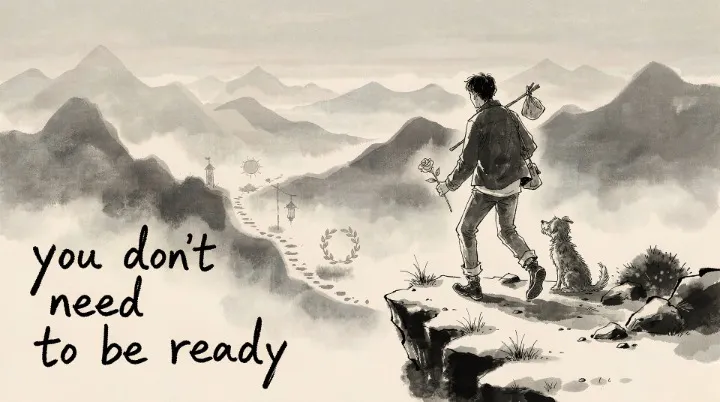
0 · The Fool — The Leap Before the Road
Archetype: The Beginner. The Leap of Faith. The part of you that starts before it knows how to finish.
The Fool is numbered zero because it stands outside the sequence — both the first step and the last. A figure at the edge of a cliff, a small bag, a white rose, a dog at the heels. The cliff isn’t a warning; it’s a threshold. Growth only happens when you leave the ground you know.
The lesson: You don’t need to be ready. You need to begin.
The shadow: Naivety — mistaking recklessness for courage, leaping without looking, refusing to learn from the fall.
Deeper dive: our full guide to The Fool Card.
1 · The Magician — Will Made Form
Archetype: The Creator. The Alchemist. Conscious agency.
All four suits are on the Magician’s table — cup, sword, wand, pentacle. Every tool is available. The wand points up, the hand points down: as above, so below. The Magician isn’t about tricks — it’s about the recognition that you already have everything you need, and the only missing piece is the decision to act.
The lesson: What you can conceive, you can create — but only if you act.
The shadow: Manipulation. Using the tools of creation to deceive — starting with yourself.
2 · The High Priestess — The Voice Behind the Veil
Archetype: The Unconscious. The Inner Knowing. The Anima.
She sits between two pillars — light and dark, conscious and unconscious — holding a scroll of hidden knowledge. She doesn’t explain; she waits for you to get quiet enough to hear what you already know. In Jungian terms, she is intuition in its purest form: knowledge that arrives without evidence.
The lesson: Stop asking. Stop researching. Sit in silence. The answer is already there.
The shadow: Avoidance dressed as intuition — using “feelings” to dodge facts you don’t want to face.
3 · The Empress — Life That Insists on Growing
Archetype: The Mother. Abundance. Nature. The body.
The Empress sits in a field of wheat, crowned with stars, ruling the senses and the seasons. She represents everything that grows when it’s nourished — including you. She’s the reminder that creativity is biological: rest, pleasure, and care are not rewards after the work; they’re the soil the work grows in.
The lesson: Nourish the body and the creative life follows.
The shadow: Overindulgence — mistaking consumption for nourishment, smothering instead of nurturing.
4 · The Emperor — Structure That Holds
Archetype: The Father. Order. Authority. The law.
The Emperor is the rule that makes freedom possible — the structure the young ego needs before it can stand alone. He represents boundaries, discipline, and the willingness to be in charge of your own life.
The lesson: Freedom without structure is chaos. Claim your authority over your own life.
The shadow: Tyranny — control for its own sake, rigid where it should be protective.
5 · The Hierophant — The Tradition That Teaches
Archetype: The Teacher. The Institution. The received wisdom.
The Hierophant is the church, the school, the lineage — the accumulated wisdom of everyone who walked before you. He appears when you need a teacher, a framework, a tradition — not to obey it forever, but to learn what it has to teach.
The lesson: You don’t have to reinvent everything. Some answers are worth inheriting.
The shadow: Dogma — outsourcing your conscience to an institution, obeying instead of understanding.
6 · The Lovers — The Choice That Costumes You
Archetype: Union. Values. The conscious choice.
The Lovers are often read as romance, but the deeper meaning is choice: a crossroads where you must choose what you value — and be willing to lose what you don’t. It’s the card of integrity: the moment you choose the self you’re becoming, even at the cost of the self you were.
The lesson: Love is a choice, not a feeling. So is identity.
The shadow: Indecision — wanting both paths, refusing the cost of commitment.
Deeper dive: our full guide to The Lovers Card.
7 · The Chariot — Willpower on the Road
Archetype: The Victor. The will. The ego’s first triumph.
Two sphinxes pull the Chariot in opposite directions, and the driver holds them together with sheer will. The Chariot is the card of the ego in motion — determination, focus, the ability to force a result. It wins battles. It gets things done.
The lesson: Master your conflicting impulses and you can move mountains.
The shadow: The victory that costs your soul — winning through domination, driven instead of guided.
⚔️ Act Two — Descent (8–14)
8 · Strength — The Lion That Learns Gentleness
Archetype: The Tamer. Compassion. Raw instinct made conscious.
A woman calmly closes a lion’s jaws — not by force, but by presence. Strength is the card that asks: what would happen if you met your own wildness with gentleness instead of repression? It marks the shift from the ego’s hardness to something softer and far more powerful.
The lesson: The strongest force is calm. Patience is a form of power.
The shadow: Weakness masquerading as gentleness — pacifying instead of confronting.
9 · The Hermit — The Light You Carry Alone
Archetype: The Seeker. The Inner Guide. Withdrawal with a purpose.
The Hermit climbs the mountain with a lantern — not to escape the world, but to find something the world can’t give: clarity. His solitude isn’t loneliness; it’s pilgrimage. This card appears when external answers have failed and the next step can only be found inward.
The lesson: Go inward. Not forever — just long enough to hear what the noise has been drowning out.
The shadow: Isolation — turning a season of retreat into a permanent escape from connection.
10 · The Wheel of Fortune — The Turn You Don’t Control
Archetype: Fate. Cycles. The turning of the world.
The Wheel turns whether you’re on top or underneath — and it always turns. This card is the ego’s first encounter with the truth that control is an illusion. What rises falls. What falls rises. The wheel isn’t cruel; it’s just indifferent to your preferences.
The lesson: You can’t control the turn, but you can choose how you ride it.
The shadow: Fatalism — using “it’s fate” to avoid responsibility for what you can actually change.
11 · Justice — The Consequence That Returns
Archetype: Karma. Truth. Cause and effect.
Justice weighs actions against consequences with blindfolded impartiality. She is the card of accountability — the recognition that every choice produces a result, whether you acknowledge it or not. What you’ve avoided paying eventually presents its bill.
The lesson: Truth is not punishment. It’s the return of what you’ve set in motion.
The shadow: Self-righteousness — measuring everyone else’s justice while exempting yourself.
12 · The Hanged Man — The Wisdom of Surrender
Archetype: The Sacrifice. The inverted view. Voluntary suspension.
Suspended by one foot, calm instead of panicked, the Hanged Man sees the world upside down — and in that inversion, sees what the upright couldn’t. He represents the willingness to stop forcing and let a situation resolve on its own terms.
The lesson: Sometimes the way forward is to stop struggling, surrender, and wait.
The shadow: Martyrdom — turning surrender into self-punishment, passivity into identity.
13 · Death — The End That Makes Room
Archetype: Transformation. Completion. The necessary ending.
Death is the most misunderstood card in the deck. It is almost never literal — it is the ending of a phase, a belief, a version of yourself that has outlived its purpose. The skeleton in the card isn’t here to frighten you; it’s here to tell you that what’s dying was already dead.
The lesson: You cannot become what’s next while still carrying what’s finished.
The shadow: Avoidance of endings — clinging to dead forms because grief is easier to postpone than to feel.
14 · Temperance — The Alchemy of Balance
Archetype: Integration. The middle path. The blending of opposites.
An angel pours water between two cups, endlessly, without spilling — the image of balance as a practice, not a state. Temperance is the card of learning to hold opposites: work and rest, reason and feeling, shadow and light.
The lesson: Wholeness isn’t choosing one side. It’s blending both.
The shadow: Mediocrity — mistaking avoidance of extremes for genuine integration.
🔥 Act Three — Integration (15–21)
15 · The Devil — The Chain You Believed Was Real
Archetype: The Shadow unmasked. Addiction. The comfortable prison.
The Devil isn’t a demon; it’s the part of you that prefers the familiar cage to the uncertain open. The chains on the figures are loose — they could walk away at any moment. They stay because the Devil offers something in exchange: safety, predictability, the narcotic comfort of not having to change.
The lesson: What’s holding you is often a belief, not a fact. The chain is looser than it looks.
The shadow: The chains themselves — the refusal to see that you could leave.
16 · The Tower — The Lightning That Frees
Archetype: Collapse. Revelation. The breaking of the false.
The Tower is struck by lightning and everything false comes down — the ambition built on ego, the identity built on other people’s approval, the structure that was never load-bearing. It’s the most feared card and often the most liberating. What collapses is what was never really yours.
The lesson: The Tower doesn’t destroy what’s true. It destroys what’s pretending to be true.
The shadow: Building your life on borrowed foundations — so the collapse is only a matter of when.
17 · The Star — Hope After Devastation
Archetype: Healing. Renewal. The calm after the collapse.
The Star is the first card after the Tower — a naked figure pouring water onto the earth and the sky, eight stars overhead. It’s the card of recovery: the quiet confidence that comes after devastation, the sense that you’re being rebuilt from the ground up.
The lesson: After the fall comes the long, gentle work of healing. It’s already begun.
The shadow: False hope — skipping the rubble to reach the stars, avoiding the actual work.
18 · The Moon — The Unconscious Lit by Night
Archetype: The Deep. Confusion. The journey through the dark.
The Moon lights a path between two towers, through water, past a wolf and a dog — the road of the unconscious, where things are not what they seem. This card appears when you’re being asked to navigate without full visibility, trusting the deeper current instead of the surface map.
The lesson: Some journeys must be taken in the dark. The moon is enough light to walk by.
The shadow: Paranoia and illusion — drowning in the deep instead of swimming through it.
19 · The Sun — Clarity After the Night
Archetype: Joy. Illumination. The conscious life.
After the Moon’s uncertainty comes the Sun’s certainty. A child rides a white horse under a blazing sun — the card of vitality, success, and uncomplicated joy. The Sun is what you become when the shadow work is done: you stop being haunted, and start being alive.
The lesson: The night ends. The sun is not a promise — it’s a fact.
The shadow: Shallowness — mistaking comfort for growth, sunlight without roots.
20 · Judgment — The Awakening Call
Archetype: Resurrection. The call to rise. Integration complete.
The dead rise from their graves at the sound of the trumpet — not to be punished, but to be called into their next form. Judgment is the moment you realize who you’ve become and answer the summons to live it fully.
The lesson: You’ve done the work. Now answer the call.
The shadow: Procrastination — hearing the trumpet and staying in the grave.
21 · The World — The Dance of Wholeness
Archetype: Completion. Integration. The Fool, returned.
A figure dances inside a wreath, holding the tools of all four suits — every element mastered, every lesson integrated. The World is not an ending; it’s the beginning of a new Fool’s Journey at a higher level. The journey never ends. It spirals.
The lesson: You are not finished. You are complete — which is different, and better.
The shadow: The false completion — mistaking one stage of the journey for the final destination.
🧭 Finding Your Place on the Journey
You don’t need a reading to locate yourself. The journey has recognizable signposts:
If you’re in Act One: Your life is about building — identity, career, relationships. The lessons are about will and structure. Ask: What am I building, and for whom?
If you’re in Act Two: Things stopped working. The old tools are failing. You’re being pulled inward against your will. Ask: What have I been avoiding that keeps showing up? — this is the phase where our Shadow Work guides become your best companions.
If you’re in Act Three: You’ve faced the shadow and survived. The work now is integration — rebuilding consciously. Ask: What do I actually want to become, now that I know who I am?
🧪 Quick Self-Check
- Which card do you keep pulling — or keep avoiding? That’s the chapter you’re in.
- Where are you in the three acts — building, descending, or integrating?
- If your life right now were one Major Arcana card, which would it be?
- What’s one thing the Tower in your life is waiting to free you from?
🛒 Tools for Walking the Journey
The journey is ancient, but the tools are affordable:
A Rider-Waite-Smith deck. The gold standard for studying the Major Arcana — every symbol is deliberate, every color carries meaning. Most study guides and card meanings assume the RWS imagery, so starting there makes everything else easier. Under $25 on Amazon.
Jung’s Man and His Symbols. The most accessible introduction to archetypes and symbolic thinking ever written — the conceptual key that unlocks what the cards are actually doing. Written for a general audience, under $15 on Amazon.
A dedicated journal. Date each entry. Record the card, your first impression, and the one-word answer to “what archetype was active today.” After a month, read back through — you’ll see your own journey unfolding in ink.
And when a card keeps returning and you can’t see what it’s asking — when the lesson is too close to see clearly — a skilled reader can help. Oranum screens every reader through a live demonstration reading. Refund policy: twenty-four hours. First session costs less than lunch.
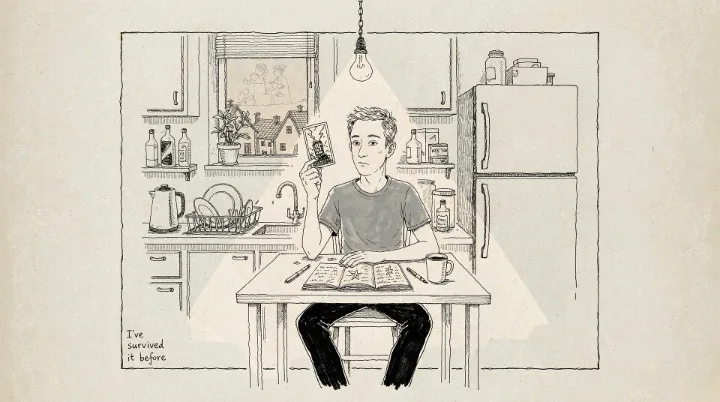
Marcus pulled The Tower again last week — ten years after the reading that scared him. This time he didn’t laugh nervously. He looked at the burning structure, the crown falling, the sky opening up, and thought: I know this one. I’ve survived it before. And I’m stronger now.
The Tower isn’t the end of the story. It never was. It’s the lightning that clears the ground for the Star.
The Fool steps off the cliff. The World dances. And you — you’re somewhere on that road right now, whether you’ve named it or not.
If you’re just starting with tarot, begin with our guide to Tarot for Absolute Beginners. To go deeper into one card, explore The Fool Card or The Lovers Card. And when the journey turns inward, our Shadow Work guides will walk with you through the descent.