Best Tarot Decks for Beginners: 2026 Review
For education and self-reflection only — not medical, psychological, or psychiatric advice. If you're in distress, please talk to a licensed professional. Full disclaimer.
The right first deck is the one you can’t stop picking up.
TL;DR
Here’s the hard truth. Most people who fail at tarot didn’t fail at tarot. They bought a deck that was beautiful to look at and impossible to learn from, confused their own confusion with a lack of talent, and quit. The deck wasn’t the problem — it was the first domino. Pick one you can actually read, and everything else gets easier. Pick the pretty one that means nothing to you, and you’ll be back in the drawer in a month, blaming yourself for something that was never your fault.
Jenna’s first deck was a gift from a friend who meant well: a lavish, hand-painted deck with gilded edges, no guidebook, and imagery so dense and personal that nothing in it matched any online meaning she found. She shuffled it once, tried to read it, felt completely lost, and put it back in the box. It took her two years to try again — this time with a deck designed for learning.
“I thought I was bad at tarot,” she said. “I wasn’t. I just had the wrong deck.”
Your first deck matters more than any other purchase in your tarot practice. It’s the tool you’ll learn on, memorize from, and build your whole visual vocabulary around. Pick the right one and learning is natural; pick the wrong one and it’s a chore.
I tested the six most recommended beginner decks on the market — for card stock, imagery, guidebook quality, and how easily a total beginner can actually learn on them. Here’s the honest breakdown.
What Makes a Deck “Beginner-Friendly”?
Four things, in order of importance:
- RWS-standard imagery. The Rider-Waite-Smith system is the language of tarot — 90% of books, apps, and guides assume its imagery. A deck that departs from it looks gorgeous and reads as noise.
- A real guidebook. Not a card list — a guidebook that explains the symbolism, the story, and how to combine cards.
- Readable scenes, not abstract art. Beginners read pictures before they learn meanings. The cards need to show something.
- Card quality you’ll want to touch. A deck that feels cheap gets replaced; a deck that feels good gets used.
The 2026 Picks
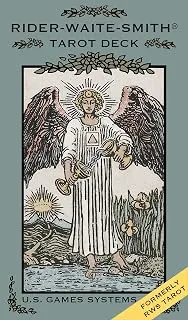
1. Rider-Waite-Smith (US Games) — The Gold Standard
Price: ~$20–25 · Best for: Anyone who wants to actually learn tarot properly
The original, published in 1909, and still the single best learning tool in existence. Every symbol is deliberate, every scene tells a story, and every book, app, and guide on the planet references it. The standard US Games edition has decent card stock, a real guidebook, and a price that makes it a no-brainer first purchase.
The honest catch: the 1909 art style isn’t for everyone — it’s period illustration, not modern design. If the aesthetic genuinely repels you, that’s a real reason to look elsewhere. Otherwise, this is the deck to learn on and keep forever.
Verdict: ★★★★★ — the default recommendation, for one simple reason: everything else is easier after this one.
Where to find it: See current price on Amazon — it regularly dips below $25 during sales.
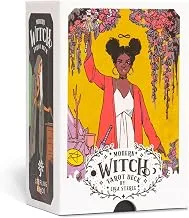
2. The Modern Witch Tarot (Lisa Sterle) — The Inclusive Upgrade
Price: ~$25–30 · Best for: Beginners who want RWS structure with contemporary art
Same system, completely modern imagery: diverse figures, current fashion, real-life scenes — the Tower is a burning cityscape, the Magician is at a vanity desk. The guidebook is excellent and beginner-friendly, and the artwork makes the meanings feel intuitive rather than academic.
The honest catch: some scenes are so modern they lose the classic symbolism beginners rely on (the Emperor’s mountain, the High Priestess’s pillars are subtly present but easy to miss).
Verdict: ★★★★½ — the best choice if you want to learn on a deck that looks like your life.
Where to find it: Check it on Amazon or browse the artist’s shop on Etsy.
3. The Light Seer’s Tarot (Chris-Anne) — The Feel-Good Favorite
Price: ~$35–40 · Best for: Emotional readers and journalers
A wildly popular modern deck with soft, luminous art and a companion guidebook that reframes every card around personal growth — less divination, more self-reflection. The card stock is premium, and the imagery is gorgeous enough to make journaling a daily ritual.
The honest catch: the art departs from RWS symbolism in places, which makes early learning slightly harder; the price is also the highest on this list.
Verdict: ★★★★ — a beautiful second deck or a journaler’s first deck, provided you also grab a reference book.
Where to find it: See it on Amazon — the companion guidebook is worth buying alongside the deck.

4. The Wild Unknown (Kim Krans) — The Minimalist Icon
Price: ~$25 · Best for: Visual minimalists, but not true beginners
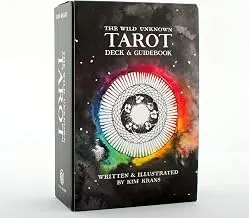
Hand-drawn, monochrome-ish, deeply atmospheric — one of the most beautiful decks of the last decade. As art, it’s outstanding. As a learning tool, it’s a trap: the minimalist images (a simple egg, a geometric feather) don’t carry the story that beginners need to read.
The honest catch: the guidebook is poetic, not instructional. You’ll love looking at it and struggle to learn on it.
Verdict: ★★★ — buy it as your second deck, when you already know the meanings and want a deck that speaks in whispers.
Where to find it: Check it on Amazon or on the artist’s site.
5. Golden Thread Tarot (Tina Gong) — The Modern Classic
Price: ~$30–35 · Best for: Minimalist aesthetics with RWS structure
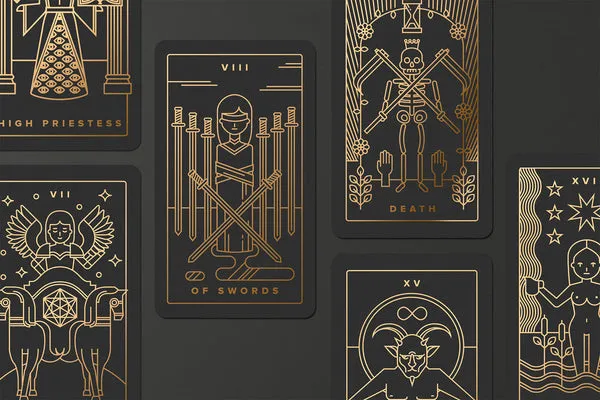
A sleek, gold-on-black deck that keeps the RWS meanings while stripping the imagery to its symbolic core — clean line art that stays faithful to the original system. The free companion app is genuinely excellent for learning.
The honest catch: the minimal line art can feel cold for some readers; it’s beautiful but less emotionally evocative.
Verdict: ★★★★ — a smart modern choice that doesn’t sacrifice learnability.
Where to find it: See it on Amazon — the companion app is free, so you’re just paying for the cards.
6. Everyday Witch Tarot (Deborah Blake) — The Budget Friend
Price: ~$20 · Best for: Total beginners on a budget
Warm, approachable art with clear, simple scenes that stay close to RWS, plus a guidebook written in plain language with practical keywords. It’s the least intimidating deck on this list — nothing here will scare a new reader.
The honest catch: the card stock is mid-range and the art is more charming than deep; some readers outgrow it quickly.
Verdict: ★★★★ — the best under-$25 pick besides the original, especially if the RWS art style feels dated to you.
Where to find it: Check it on Amazon — frequently on sale for under $20.

How to Choose — Three Questions Before You Buy
- Can I learn on it? Check the card images online first. Can you tell what each card means from the picture? If not, it’s art, not a learning tool — keep it for later.
- Does it stay close to Rider-Waite-Smith? For your first deck, yes it should. Deviations are for readers who already know the system.
- Will I pick it up daily? The best deck is the one that makes you want to shuffle it. Beauty matters — but as motivation, not as substance.
The short version: if in doubt, buy the Rider-Waite-Smith. It’s the cheapest, the clearest, and the one every other resource assumes. Learn on it for a year, then buy the beautiful deck that caught your eye — you’ll finally be able to read it.
Quick Self-Check
- Which deck’s imagery can you almost read already — just from the pictures?
- Are you choosing a deck to learn on, or to collect? Different decks for different jobs.
- Does the guidebook explain symbolism, or just list keywords?
- Will you feel silly carrying this deck to a café? If yes, you won’t use it. Pick the one you’ll actually carry.
Where to Buy
All decks on this list are widely available on Amazon (fast shipping, easy returns, often the best price) and many are on Etsy from independent shops if you want to support makers directly:
Check prices across both before buying — the same deck can swing $10 between sellers. And if you’re weighing a deck that isn’t on this list, apply the three questions above: if you can read it, learn on it, and you’ll pick it up daily, it’s the right deck for you.
Jenna’s second deck was the Modern Witch Tarot. She picked it because the art looked like her world — people who looked like her, situations she recognized. She learned the whole system in three months, joined a study group, and now reads for friends on weekends.
“I keep the gilded deck on my shelf,” she said. “It’s beautiful. But I read with the one I could learn on.”
The right first deck isn’t the most impressive one. It’s the one that teaches you — and then keeps showing up in your hands.
Learn the System Before You Collect
A deck is only half the equation. The other half is a system you can actually read through — because even the clearest deck won’t tell you what three cards in a row mean.
Start with Tarot for Absolute Beginners to learn the structure without drowning in it, then work through The Fool’s Journey: A Complete Guide to the Major Arcana — the 22-card story every other meaning hangs off.
If you want to see the cards read live before you commit to a deck, watch a tarot reader on Oranum work a real question — it’s the fastest way to see whether the imagery that clicks for you is classic or modern. Or browse vetted tarot readers on PsychicOz for a one-on-one read with a deck in hand.
Frequently Asked Questions
Which tarot deck is best for an absolute beginner?
The Rider-Waite-Smith. It’s the system 90% of books, apps, and guides assume, so every resource you reach for will line up with the imagery in your hands. It’s also the cheapest serious option, which matters when you’re still not sure the practice will stick.
Is the Wild Unknown bad for beginners?
Not bad — wrong for the job. It’s one of the most beautiful decks in print, but its minimalist imagery doesn’t show the story a beginner needs to read from the pictures. Buy it as a second deck, after you’ve internalized the meanings and want something that speaks in whispers.
Do I need a deck with a guidebook?
Yes, for your first one. A guidebook that explains symbolism — not just lists keywords — is the difference between memorizing and understanding. If a deck’s guidebook is poetic rather than instructional, treat that deck as art first and a learning tool second.