Anxious Attachment: Why You Overthink Every Text and How to Feel More Secure
For education and self-reflection only — not medical, psychological, or psychiatric advice. If you're in distress, please talk to a licensed professional. Full disclaimer.
The anxiety isn’t really about whether they love you. It’s about whether you believe you’re worth loving.
TL;DR
What we actually know is this: anxious attachment is a nervous system trained to scan for signs of abandonment, not a personality flaw and not a moral failure. The pattern shows up in childhood when caregiving is inconsistent—sometimes warm, sometimes cold, never predictable. The child learns the rule that love is unreliable and that staying on high alert is the only safety. In adulthood, that alert system runs on the same template, aimed at the partner. The fix isn’t “be less needy.” It’s slowly teaching the nervous system, through repeated experience, that closeness doesn’t have to mean threat. Most people make meaningful progress within a year or two. The work is real, but it’s not endless.
What does anxious attachment actually look like?
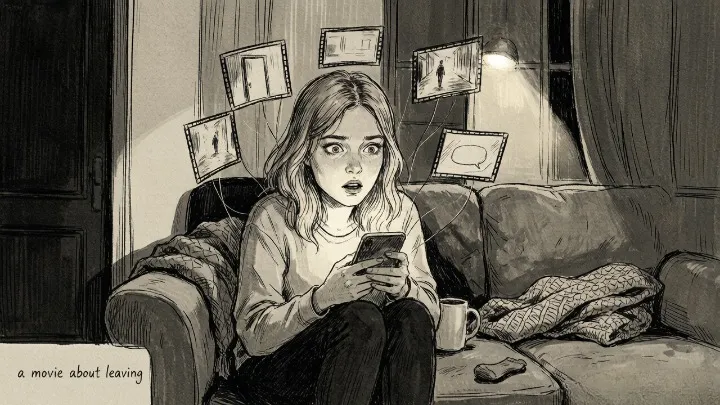
The classic scene: three hours without a reply, and your brain has already produced a full movie about being left.
Anxious attachers are hypersensitive to the smallest shifts in a relationship. Their tone was a little flat. The reply took longer than usual. They glanced at their phone during dinner. Any of these triggers a full-body alarm. The message the alarm plays: “Something’s wrong. They’re pulling away. I need to fix this right now.”
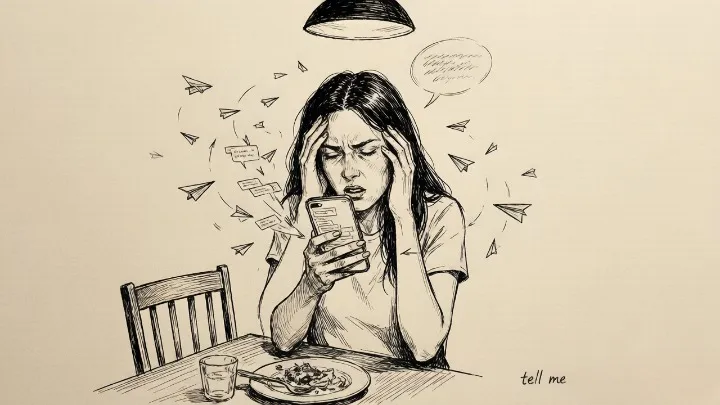
To quiet the alarm, anxious attachers develop what psychologists call protest behaviors. Repeated texting. Picking fights to test whether the other person will stay. Threatening to leave just to see if they’ll chase. These actions look like anger on the surface. Underneath is a single unspoken sentence: “Please tell me you’re still here.”
The most painful part of this pattern, and the part that makes it stick, is that the protest behaviors usually work once or twice. The partner chases, the closeness returns, the alarm quiets for a while. That intermittent reinforcement is exactly what keeps the system running. The pattern is not a choice; it’s an old game whose rules feel like reality.
A quick self-check that often helps: when you scan a partner’s face, are you looking for confirmation, or for evidence? Confirmation sees the smile and registers it. Evidence looks at the same smile and asks what are they hiding? If the second is your default, the anxious pattern is probably running. For the wider attachment map, our attachment-styles primer covers all four styles and how they pair.
Where does anxious attachment come from?
Attachment theory traces this back to inconsistent early care.
If a caregiver was warm sometimes and cold other times—with no predictable pattern—the child learns one rule: love is unreliable, and I have to stay on high alert to catch it. That rule doesn’t expire in adulthood. The partner becomes the new caregiver, and the old surveillance system stays online.
Psychologists call this hyperactivation. When distance is detected, the nervous system cranks the anxiety to maximum, forcing a search for reconnection. This isn’t weakness or drama. It’s a brain running survival software that was installed decades ago.
A useful comparison: the avoidant pattern is the opposite move, and they often end up paired for exactly that reason. The anxious system cranks up, the avoidant system shuts down, and the two opposing programs lock into a chase-withdrawal loop. We covered the dynamic in more detail in why the wrong people keep showing up—the same pattern under a different lens. If you keep being drawn to partners who are emotionally unavailable, the attraction itself is worth paying attention to, not fighting.
What actually helps reduce the overthinking?
First, learn to spot protest behavior and hit pause. When the urge to fire off five follow-up texts hits, stop and ask: am I expressing a need right now, or am I dumping fear? If it’s fear, write it in your notes app. Don’t send it.
Second, say what you need directly. Anxious attachers often package needs inside accusations. Try swapping “Why are you ignoring me?” for “I’m feeling a little anxious today—can we talk for five minutes?” The first makes someone want to retreat. The second tells them exactly how to help. The change is small, but it changes the entire dynamic in a single sentence. For the larger work of separating “I feel” from “you are doing this to me,” our courage to be disliked piece covers the same terrain from the Adlerian side.
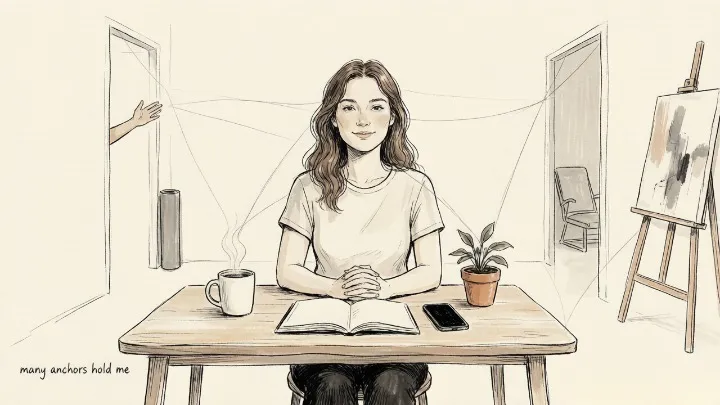
Third, spread your emotional safety net wider. Anxious attachers tend to route all their emotional needs through one person. When that channel goes quiet, panic sets in. Build multiple anchors—friends, exercise, creative work, a therapist. When security comes from several sources, one line going silent doesn’t sink the ship.
Fourth, expect the system to push back. When you start doing any of the above, the inner critic will often try to recruit you back. You’re being unreasonable. You’re being too much. They really are pulling away. That voice isn’t data, it’s the system trying to keep its old job. Naming the voice is half the win. The other half is acting anyway.
A useful frame: the goal isn’t to stop feeling the alarm. The goal is to feel it, name it, and choose the next move. The first time you do that, it’s awkward. The tenth time, it’s a skill. The hundredth time, it starts to feel like a different nervous system.
A small practice for this week
Anxious patterns have a particular way of feeling unsolvable. They aren’t. They respond to small, repeated corrections more than to big resolutions. Try this in the next seven days:
- Pick one relationship trigger that you know is going to come up. The unread message, the partner who’s a few minutes late, the friend who canceled. Pick one, not all of them.
- When it happens, write the panic down before you act. Three lines: what happened, what you felt in your body, and what your brain immediately told you the meaning was. Don’t try to fix any of it. Just write.
- Wait 24 hours before you do anything that involves the other person. The text, the confrontation, the passive-aggressive comment—all of it can wait. Most of the time, after 24 hours, the urgency is gone and a clearer answer has appeared.
- Then, when you do respond, lead with the feeling, not the accusation. “I felt panicked when I didn’t hear from you” works. “You never text me back” doesn’t.
The practice isn’t about getting it right every time. It’s about building the muscle of pausing between the alarm and the action. That pause is the entire leverage point. Most people find that within a few weeks, the gap between alarm and action has widened, and the response inside that gap is calmer, more direct, and easier to live with.
If you’d like a sounding board for what you’re noticing in yourself, the Oranum love category collects live advisors who work in this exact territory of love and relationship patterns. Use them as a mirror, not a verdict.
When should you get professional help?
If the anxiety is interfering with sleep, work, or basic functioning—or if protest behaviors have escalated into things like tracking locations or checking phones without permission—self-regulation alone may not be enough.
A therapist can help trace the attachment patterns back to their source and offer something these patterns never had: a relationship where being responded to consistently is the norm, not the exception. Anxious attachment isn’t a diagnosis. But if it’s making life painful, it’s worth taking seriously.
A few therapy modalities have a particularly good evidence base for this work: Emotionally Focused Therapy (EFT) for couples, Internal Family Systems (IFS) for working with the parts that protest, and sensorimotor psychotherapy for the body-level work that often sits underneath attachment injuries. A good therapist will know which one fits your situation, and most will offer a free 15-minute call before you commit.
Where this comes from (the science)
Attachment theory began with John Bowlby, who argued in the 1950s that our earliest bonds with caregivers shape how we relate for the rest of our lives. Mary Ainsworth’s “Strange Situation” experiments then showed it empirically: infants whose caregivers were inconsistently responsive developed exactly the hypervigilance that anxious adults still carry.
In 1987, Hazan and Shaver extended the framework to romantic love — and found the same three patterns (secure, anxious, avoidant) showing up in adults. The anxious style isn’t a modern pathology invented by dating apps; it’s a well-documented, cross-cultural pattern of bonding. That matters because it reframes the whole thing: you aren’t broken. You’re running an adaptive strategy that made sense in an unreliable environment — and no longer serves you.
More recent work by Mario Mikulincer and Phillip Shaver (2007, 2016) has clarified the mechanism: when the attachment system is activated, attentional resources get pulled toward threat signals, which is why an anxious partner can miss all the evidence that the relationship is fine. This is one of the reasons it’s so hard to “just see the truth” in the moment. The nervous system is literally filtering for danger. It helps to know that, because the “I should know better” inner critic is a second wound on top of the first.
Want the full map? Start with Attachment Styles: The 4 Ways We Love (and Why They Explain Everything).
Frequently asked questions
Is anxious attachment a mental health diagnosis? No. It’s a relational pattern, not a disorder. That said, it frequently co-occurs with anxiety, and the two feed each other — which is why addressing the attachment pattern often calms the general anxiety too.
Why am I always attracted to avoidant people? Partly because the dynamic feels familiar — anxious and avoidant styles lock into a pursuit-withdrawal loop that both people mistake for chemistry. Partly because secure, calm partners can feel “boring” to a nervous system tuned to constant threat. Recognizing this is the first step toward breaking the pattern.
Can I actually become securely attached? Yes. Research on “earned secure attachment” shows people do change — most reliably through a long-term secure relationship and/or therapy. It’s not about becoming a different person; it’s about teaching your nervous system, through repeated, predictable experiences, that closeness doesn’t have to mean threat. For a more detailed account of how this shows up, the attached book summary goes deeper into the earned-security research.
How long does healing take? There’s no honest timeline, but the realistic frame is months to years, not days. The encouraging part: every single time you catch a protest behavior, name your need directly, and survive the wait, you’re rewiring a little. Progress compounds.
What if my partner won’t change with me? You can still change. The dynamic usually shifts once one person in the system does, because the old dance has nobody to dance with. If your partner is openly dismissive of the framework or uses your self-knowledge as a weapon, that’s different and worth treating as a separate problem. Our what to do when your partner keeps pulling away piece is the read for that.
Does anxious attachment ever go away on its own? Sometimes life does the work—an unusually steady partner, years of therapy, a community that holds you. Most people need a deliberate practice alongside whatever life gives them. The pattern doesn’t typically go away on its own, but it can become a smaller and smaller part of how you live, to the point where it stops driving the car.
More in this cluster: Attachment Styles · Avoidant Attachment · Attachment Theory in 5 Minutes · Carl Jung and the Shadow Self — same material, different door