Dark Traits at Scale: How AI Makes Manipulation Cheaper
For education and self-reflection only — not medical, psychological, or psychiatric advice. If you're in distress, please talk to a licensed professional. Full disclaimer.
Manipulation never disappeared. It just learned to scale.
TL;DR
What we actually know is this: psychologists have a name for the cluster of traits that let one person use another — the dark triad, made up of Machiavellianism, narcissism, and psychopathy. Research on these traits, including a 2025 systematic review of over sixteen thousand participants, shows they reliably corrode trust and well-being over time. What’s new isn’t the traits. It’s the delivery. The same manipulation that once needed a face-to-face charm offensive can now be automated, laundered through a feed, and aimed at thousands of people at once — often written by no one at all. The practical skill is not moral outrage. It’s recognition: learning to see the mechanism under the flattery, so you stop mistaking it for the real thing.
The three traits, in plain language
The dark triad isn’t a diagnosis. It’s a shorthand for three overlapping tendencies that show up, in varying degrees, in ordinary people — not just in villains.
Machiavellianism is the trait of treating people as tools. Someone high in it computes relationships the way you’d compute a budget: what can this person be made to yield, and at what cost to them. The name comes from the political thinker Niccolò Machiavelli, whose advice boiled down to it’s better to be feared than loved, and appearances matter more than reality.
Narcissism is the trait of needing the mirror. A narcissistic person requires a steady feed of admiration to hold a fragile sense of self together. The grandiosity is armor; underneath is a self that can’t sustain itself without being reflected back as special.
Psychopathy is the trait of missing the debt. It’s not cruelty for its own sake so much as the absence of the inner voice that normally says you’ll regret hurting them. Remorse doesn’t register, so neither does restraint.
These three show up together often enough that researchers study them as a cluster — the Short Dark Triad, or SD3, is the standard questionnaire. The 2025 systematic review by Bueno de la Fuente and colleagues, synthesizing fifteen studies and over sixteen thousand people, found the pattern that matters: these traits trade short-term wins for long-term collapse. The manipulator advances for a while. Then the trust runs out.

The mechanism: why it works, and why it fails
The engine under all three traits is a broken version of what researchers call social exchange.
Social exchange theory, formalized in a 2022 review by Russell Cropanzano and colleagues, describes how relationships actually run: we give, the other gives back, and over time a balance of reciprocity builds into trust. It’s not cold — it’s just the name for the fact that healthy connection is a long, quiet loop of mutual return.
A manipulator breaks the loop on purpose. They take the giving side of the exchange for themselves and skip the returning. In the short term, it works — they extract value, they get the admiration, they win the deal. The catch is that the loop is what trust is made of, and once it’s broken, it doesn’t rebuild easily. The manipulator can keep moving to fresh targets, but they can never stop moving. The collapse the research documents is the bill arriving: the burnout, the isolation, the erosion of every relationship that might have held them.
For the person on the receiving end, the damage is quieter. You give, they take, and you’re left wondering why you feel depleted and somehow still not enough. Our pieces on narcissist signs and gaslighting map the personal version in detail.
What changed: the scale
Here’s the part that’s genuinely new, and it’s not about the traits.
Manipulation used to be expensive. It required showing up — a face, a voice, an evening of charm, a sustained performance. That expense was its own limit. A manipulator could only work so many targets, because each one cost them real presence.
Automation removed the cost. The same flattery can now be generated at zero marginal expense and aimed at thousands of people at once. A flood of sweet messages, each tailored just enough to feel personal, written by no one. A feed that learns your insecurity and serves you exactly the content that keeps you hooked on it. A voice that tells you, at four in the morning, exactly what you want to hear — and never once got tired, never once meant it, because nothing was there to mean it.

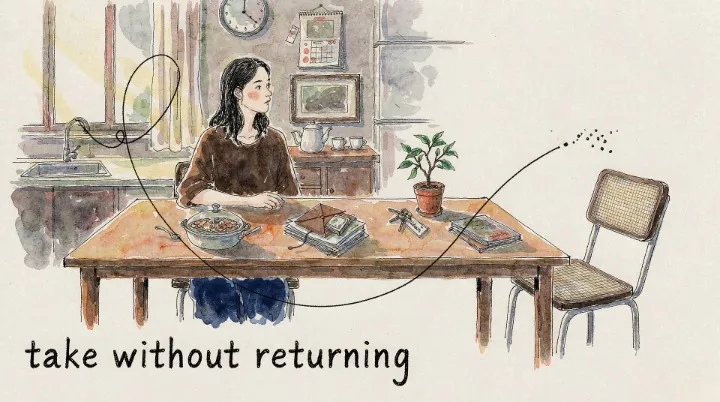
That’s the insight worth holding: the dark triad didn’t change. The cost of deploying it collapsed. The mechanism is the same as it ever was — take without returning. What’s new is that it no longer needs a human behind it, and it no longer has to stop.
The danger isn’t a supervillain AI. It’s the ordinary version: manipulation so cheap and so well-timed that it stops reading as manipulation and starts reading as connection. That’s the more honest worry, and the more useful one to hold.
The bridge: what the shadow has to do with it
There’s an older vocabulary for what’s happening here, and it’s worth reaching for it, because the old vocabulary came from people who spent a long time watching the dark parts of the self.
Jung called it the shadow — everything about yourself you’ve disowned, which then runs you from behind your own back. The dark triad, seen through that lens, is shadow material that hardened into a way of operating on other people: the manipulation, the need for the mirror, the missing remorse. Jung’s point was never that these things don’t exist. It was that they don’t go away when you ignore them. They go underground, and they come out sideways — at you, or at someone else. Our Jung shadow piece walks the mechanics.
The reason this matters now, in the age of the feed, is that the shadow has always been what we project onto a screen when we don’t want to look at it. And now the screen talks back — in a voice tuned to exactly what we haven’t examined. The manipulator outside is a problem. The unexamined need inside is what makes the manipulation land. The two are the same work, from opposite ends.
This is why the practical answer isn’t just “avoid manipulative people.” It’s know yourself well enough that the flattery can’t find a purchase. The person who knows their own need for approval is harder to flatter. The person who knows their own loneliness is harder to love-bomb. Recognition, not paranoia, is the defense. If you’re untangling where a relationship crossed the line from connection into extraction, Oranum’s love and relationship advisors work one-to-one to help you see the pattern clearly. The point isn’t to fear people. It’s to stop mistaking a script for a person.
Frequently asked questions
Is everyone with dark traits dangerous? No. These traits exist on a spectrum, and most people have some measure of them. They become damaging when they’re high and unexamined, and when they’re aimed at others. The useful question isn’t “does this person have a trait” but “is this relationship extracting more than it returns.”
Can AI actually manipulate people? Not with intent, because an AI doesn’t want anything. But it can be used to manipulate, by making flattery and grooming cheap to deploy at scale. The mechanism is human; the technology just lowers its cost. That’s the real risk.
How do I tell real connection from manipulation? Watch the exchange. Real connection has a loop — you give, they give back, and the balance feels alive. Manipulation is one-directional: it takes, flatters, and never actually returns. If you feel drained and somehow still wanting more, that’s a signal.
Does knowing my own shadow really help? Yes. The reason manipulation lands is that it aims at something unexamined — the need for approval, the loneliness, the fear. Naming those things in yourself removes the target. Recognition is the most practical defense there is.
Is this connected to my spiritual practice? In the oldest sense, yes. Shadow work and self-knowledge are exactly what the contemplative traditions mean by “know thyself.” The modern twist is that the thing we used to project onto other people can now be aimed back at us by a machine. Same work, new stakes.
More in this cluster: AI Tarot vs Human Readers · Why People Choose Human Empathy · Narcissist Signs · Carl Jung’s Shadow — same territory, different door.